
Professional Academic Editing That Helps You Submit with Confidence
We help students and researchers refine their dissertations, theses, journal articles, and research papers with expert academic editing, clear language, and accurate formatting, ready for submission, publication, or peer review.

You've Done the Hard Work. Now Let Us Refine It.

You've done the hard work: gathering your research, developing your argument, and putting your ideas into writing. Now let us help you submit your work with confidence.
That's where we come in. Tweaks offers professional academic editing and proofreading services to help you polish your research with confidence. Whether you're preparing a thesis, dissertation, research paper, or academic report, our expert academic editors ensure your writing is clear, well-structured, and ready for submission, with tracked changes and reliable on-time delivery.
Whether English is your first language or not, even exceptional research can lose impact if it isn't communicated clearly. Professional academic editing ensures your ideas are presented with the clarity, precision, and academic tone they deserve.
Why Choose Tweaks?

Transparent Edits
All edits are tracked for easy review. We improve clarity, structure, and grammar while preserving your voice. You stay in control, with every change clearly marked.
On Time
We know deadlines matter. Most projects return in 3–5 days, depending on length. We schedule efficiently, provide updates, and ensure you have time to review before submission. Deadlines are always met.
Trusted by Academics
Your document is handled by a qualified editor. Our experienced team specialises in helping postgraduate students and researchers, especially second-language English speakers, ensuring clarity, accuracy, and the right tone.

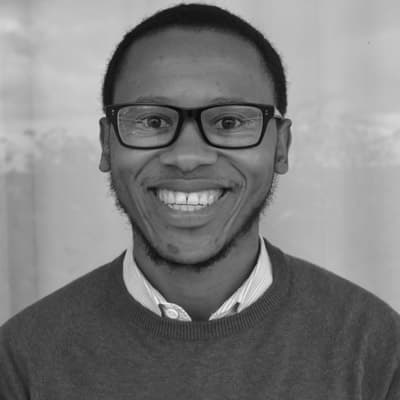
MEET YOUR EDITOR
I am Chengetai Chikadaya — Researcher, Academic Editor, Writer, and founder of ZUVA Academic Coaching.
One of the biggest challenges I have observed over the past 16 years is that exceptional research is often overlooked because it is not communicated as clearly as it could be. Strong ideas deserve strong writing, and every researcher deserves the opportunity to have their work judged on the quality of their thinking, not the clarity of their language.
As the founder of Zuva Academic Coaching, I have spent the last 16 years supporting students, researchers, and academics at every stage of their academic journey. During this time, I have edited thousands of research papers, dissertations, theses, journal articles, and academic manuscripts, helping authors strengthen clarity, improve structure, and meet the standards expected by universities and academic publishers.
My approach goes beyond proofreading. I work collaboratively with every client to preserve their voice while enhancing clarity, coherence, and academic rigour. Whether you are preparing your first dissertation or your latest journal article, my goal is to ensure your work is polished, professional, and ready for submission.
I believe great research has the power to change lives, influence policy, and advance knowledge. My mission is to help you communicate your ideas with clarity, confidence, and the impact they deserve.
What We Edit:
- Grammar & Spelling
- Structure & Flow
- Clarity & Tone
- Formatting & Style
- Reference Accuracy
- Expert Feedback
TRUSTED BY STUDENTS FROM
LEADING UNIVERSITIES




What Our Clients Say
What students, lecturers, and researchers say about their experience with Tweaks.
"Working with Tweaks is great, their editors are on the ball, on the money all the time and that is what I need from an editor."
Academic Editing Services
Browse the list below to learn more about each of our academic editing services. Each description outlines what’s included, who it’s for, and how it can support your academic goals.

Academic Editing
Deep structural, stylistic, and grammatical polishing for theses and dissertations.

Journal Article Editing
Prepare your paper for international, peer-reviewed journal submission.

Reference Checking
Verify in-text citations against your reference list for consistency.

Formatting
Align margins, fonts, and headings to APA, Harvard, or university guidelines.

Reference List Editing
Clean up and standardize your reference list entries to a chosen style guide.

Abstract Editing
Refining abstract summaries to ensure impact and conciseness for readers.
Get an Instant Editing Estimate
Find out what your project is likely to cost in less than a minute. Once you've completed your estimate you'll be able to request a formal quote for your thesis.
Estimates are calculated from each service’s published rate and your chosen delivery speed. Final quotes are confirmed by our team and may vary based on document complexity and the details you provide in the brief.
Estimated Cost & Quantity Planner
Pick a service tab, adjust its quantity and delivery speed, then add it to your estimate. Switch tabs to plan more services. All prices are in South African Rand (ZAR).
Academic Editing
- Academic Editing10 A4 pages • standard
Order Quantity Directive: Please increase the quantity of each service to match the size of your document. If you purchase fewer items than the number of pages or documents you submit, only the quantity purchased will be edited.
This is what our editing actually looks like
Tweaks uses tracked changes on every document. Toggle between the original, simple markup and full markup to see exactly how we work and why every change is made.
Shifting the Narrative: Towards an Authentic Representation of African Realities in Global Discourse
A sample research paper for editorial illustration purposes
Abstract
For decades, dominant narratives about Africa has been shaped by external perspectives that prioritise external perspectives prioritising deficit, conflict, and underdevelopment have shaped representations of Africa. This paper argue argues that a deliberate shift in how Africa is represented in the representation of Africa across academic, media, and policy discourse is not only necessary but urgentnecessary but urgently overdue. Drawing on postcolonial theory and Afrocentric scholarship, the study examines this study examines the mechanisms through which negative stereotypes are reproduce reproduced and propose proposes a framework for counter-narratives that centres African agency, innovation, and diversity. The findings suggest that authentic representation have has significant implications for continental development, international partnerships, and the self-perception of African youth'syouth.
1. Introduction
The representation of Africa in global discourse has long been a site of contestation. Western media outlets, international organisations, and academic institutions have historically constructed Africa as Africa's representation in global discourse has long been contested. Western media outlets, international organisations, and academic institutions have historically constructed the continent as a continent defined by it's its problems rather than its possibilities (Wa Thiong'o, 1986; Mbembe, 2001). These narratives, which Achille Mbembe (2001) describes Mbembe describes as the “negative” imaginary, have profound and lasting consequences: they effect affect foreign investment decisions, shape humanitarian interventions, and perhaps most damagingly, — most significantly — influence how young Africans see themselves and their futures.
In recent years, scholars, journalists, and activists across the continent have began begun to challenge these representations. Initiatives such as the “Africa is a Country” platform, the growing body of Afrofuturist literature, and the increasing visibility of African voices in international forums all points point to a growing awareness that narrative change is inseparable from structural change. However, the academic literature on this subject remains fragmented, and there is a lack of consensus on Despite this momentum, scholarly consensus on what a counter-narrative framework should actually look like in practise.practice remains elusive.
This paper seeks to address this gap. Specifically, it In doing so, it ask asks three questionsguiding questions: First, through what mechanisms are deficit narratives about Africa perpetuated? Second, what theoretical resources does do postcolonial and Afrocentric scholarship offer for constructing alternativescounter-narratives? Third, how can these alternatives such counter-narratives be operationalised in academic writing, policy documents, and public communication in a way that is both rigorous and accessibleaccessible to diverse audiences?
Editor Comments
GRAMMAR — Subject-verb agreement: 'Africa' is a singular noun and requires a singular verb. This error recurs in multiple paragraphs throughout the document. Search for every verb following 'Africa' and confirm agreement before resubmission. Your supervisor will flag this pattern.
STRUCTURE — 'Not only necessary but urgent' is a strong rhetorical claim made here without evidential grounding. Revised to 'urgently overdue', which carries the same force but is better supported once your findings are presented. Revisit this claim in your final edit after the results chapter is complete.
STRUCTURE — This introduction opened with a passive construction ('has long been a site of') that buried the subject. Restructured to open with the active subject 'Africa's representation'. General principle: topic sentences should place the key subject in subject position, not in a prepositional phrase.
REFERENCING — Double citation: you cite Mbembe (2001) parenthetically and then again by full name inline in the same sentence. Choose one form. APA style: first in-text mention = 'Mbembe (2001)'; subsequent mentions = 'Mbembe' without the year.
WORD CHOICE — 'Effect' is a noun; the verb form is 'affect'. You need the verb here: 'they affect foreign investment decisions'. Search the full document for every instance of 'effect' and confirm whether it functions as noun or verb.
WORD CHOICE — 'Practise' (British English verb) vs 'practice' (noun). South African academic English follows British conventions. You need the noun here: 'in practice'. Check every instance across the full document.
STRUCTURE — Research questions are well-structured. However, 'it ask three questions' is both grammatically incorrect and too informal. Revised to 'asks three guiding questions', which also signals methodological intent. Also note: Question 3 ('accessible') is underspecified. Accessible to whom? Add your target audience.
Frequently Asked Questions
Our Services
Prices & Payments
Guarantees
Referencing
Formatting
Academic Integrity
Still in Doubt?
Our Values
The principles that guide every decision we make and every relationship we build.

Freedom
We are a collective, reimagining life, freeing ourselves to operate at our optimised versions and hoping you will join us.

Knowledge
We value knowledge gained through professional and personal experiences and education – through perceiving, discovering, and learning.

Empathy
We empower! Keeping a deep awareness of the real-life challenges that the marginalised face is essential and informs solution mapping.

Creativity
Ubuchule Is the creative source of our innovation and inspiration. It challenges us to find solutions collaboratively.

Change
Change is inevitable, and so, we are always prepared to respond, adapt, scale and move in a different direction. Quickly!

Community
We are! through others. We strongly believe in a universal bond of sharing that connects all of us.
Get In Touch
To see why so many changemakers choose to work with us.